Uncover the History, Map, Travel Tips, and Hidden Secrets of Saigon’s Underground Labyrinth
Updated for 2026 | Travel & History Guide
Located just 70 kilometers northwest of Ho Chi Minh City, the Cu Chi Tunnels stand as one of the most remarkable military engineering feats in modern history. Spanning over 250 kilometers of interconnected underground passages, this subterranean network served as the strategic stronghold for the Viet Cong during the Vietnam War.
Today, the Cu Chi Tunnels are a top-rated historical landmark, attracting millions of international travelers eager to witness the resilience, ingenuity, and tactical mastery of Vietnamese guerilla forces. Whether you are a history enthusiast, an adventurous traveler, or a first-time visitor to Southern Vietnam, this comprehensive guide provides everything you need to know about exploring the Cu Chi Tunnels.
Table of Contents
1. The History and Significance of the Cu Chi Tunnels
Origins in the Indochina War
The construction of the tunnels began around 1948 during the First Indochina War, when local resistance forces fought against French colonial rule. Initially, the tunnels were simple, isolated structures built to store weapons, hide key personnel, and store vital communication equipment.
Expansion During the Vietnam War
By the mid-1960s, as conflict with American forces intensified, local villagers and Viet Cong soldiers expanded the network into an entire underground city. Using basic hand tools like short hoes and woven baskets, workers excavated hundreds of thousands of tons of hard clay soil. The tunnels connected villages, combat outposts, and command headquarters across the Cu Chi district and beyond, reaching all the way to the Cambodian border.
2. Engineering and Underground Life
The engineering of the Cu Chi Tunnels is a masterclass in adaptation under extreme conditions. The soil in Cu Chi contains high amounts of clay and iron, making it remarkably stable and resistant to collapse, even under heavy bombardment.
Architectural Features
- Multi-Layer Design: The network featured three distinct levels:
- First Level (3 meters deep): Used for firing posts, quick-movement corridors, and booby trap mechanisms.
- Second Level (6 meters deep): Contained sleeping quarters, field hospitals, kitchens, and command posts.
- Third Level (8–12 meters deep): Provided shelter from heavy artillery strikes and carpet bombing, often connecting directly to water wells or the Saigon River for escape routes.
- Invisible Ventilation: Air vents were disguised as ant hills, hollow tree roots, or termitaria, angled to allow fresh air in while keeping rainwater out.
- Hoang Cam Stoves: Cooking areas used specially designed smokeless stoves that dissipated smoke along long subterranean channels, releasing it miles away as thin ground fog at dawn to avoid aerial detection.
Daily Life Underground
Life inside the tunnels was arduous. Soldiers and civilians endured scorching heat, extreme humidity, total darkness, and constant threats from venomous insects, rats, and disease. Most activities occurred under the cover of night, while daytime was reserved for resting, manufacturing weapons from unexploded enemy ordnance, and planning tactics.
3. Ben Dinh vs. Ben Duoc: Which Site Should You Visit?
The Cu Chi Tunnels complex is split into two primary tourist sites: Ben Dinh and Ben Duoc. Choosing the right location depends on your preferred travel style and physical comfort level.
| Feature | Ben Dinh Section | Ben Duoc Section |
|---|---|---|
| Distance from Saigon | ~50 km (1.5 hours drive) | ~70 km (2 to 2.5 hours drive) |
| Crowd Level | High (popular for big tour buses) | Low to Moderate (quieter, local vibe) |
| Authenticity | Tunnels widened & modernized for tourists | Original tunnels, authentic size & feel |
| Key Highlights | Firing range, quick access, souvenir shops | Ben Duoc Memorial Temple, vast complex |
4. Key Highlights and Activities at the Site
Crawling Through the Tunnels
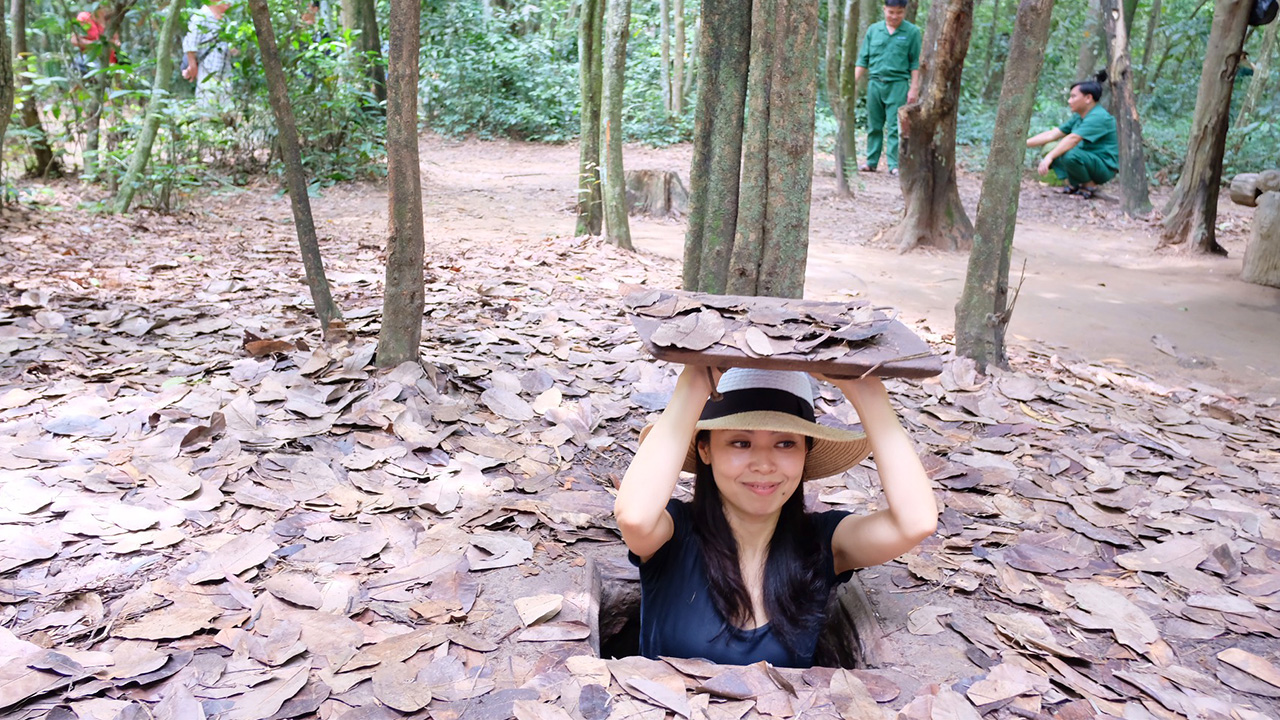
Visitors have the rare opportunity to climb down into actual sections of the tunnel network. Selected segments have been widened and retrofitted with low-voltage lighting to accommodate foreign visitors, though the experience remains authentic and claustrophobic.
Examining Guerilla Warfare Traps
The site displays various handmade traps used by Viet Cong guerillas, including punji stick traps, folding chair traps, and rolling grenade traps. These exhibits highlight how simple materials like bamboo and scrap metal were repurposed for territorial defense.
The Military Firing Range
Both sites feature a live-fire range where visitors over 18 years of age can purchase ammunition and fire historic firearms used during the war, including the AK-47, M16, and M60 machine gun.
Tasting Guerrilla Food
At the end of the tour, visitors are served a traditional wartime meal consisting of boiled cassava root dipped in salted peanuts and sesame, accompanied by warm green tea—the primary staple diet for fighters inside the tunnels.
5. Practical Travel Information
Best Time to Visit
Southern Vietnam experiences two primary seasons:
- Dry Season (November to April): The optimal time to visit. The ground is dry, crawling conditions are comfortable, and forest pathways are clear.
- Wet Season (May to October): Torrential afternoon rains can make the outdoor trails muddy and increase underground humidity. If visiting during this time, book a morning departure.
Opening Hours and Entrance Fees
- Opening Hours: 7:00 AM – 5:00 PM daily (including holidays).
- Entrance Fees:
- Ben Dinh: ~110,000 VND per person.
- Ben Duoc: ~90,000 VND per person.
- Note: Firing range bullets are sold separately by the cartridge.
How to Get There
- Speedboat (Recommended for comfort): Departs from Bach Dang Wharf in central Saigon. Takes approximately 75 minutes along the Saigon River, offering scenic views of rural riverbanks.
- Private Car or Grab: Takes 1.5 to 2 hours depending on city traffic. Offers flexibility for customized schedules.
- Organized Group Tour: Bus tours depart daily from District 1, often combining Cu Chi Tunnels with the Mekong Delta or a Saigon city tour.
- Public Bus: Take Bus #13 from Ben Thanh Market to Cuchi Bus Station, then transfer to Bus #79 heading to Ben Duoc. Budget-friendly, but total travel time takes around 2.5 to 3 hours each way.
6. Essential Tips for Visitors
- Dress Appropriately: Wear lightweight, breathable clothing that you don’t mind getting dirty. Sturdy sneakers or hiking shoes are essential.
- Pack Insect Repellent: The surrounding jungle environment has mosquitoes and insects. Apply repellent prior to starting the walking tour.
- Claustrophobia Warning: The tunnels are dark, hot, and narrow. If you suffer from severe claustrophobia, heart conditions, or mobility issues, opt to view the surface displays, trapdoors, and historical videos instead of crawling underground.
- Hydrate Regularly: Humidity in the jungle canopy is high year-round. Carry a water bottle with you during the walking portion of the tour.
Best Time of Year to Visit
The best time to visit Cu Chi Tunnels is during Southern Vietnam’s dry season, running from November to April. The weather is dry, making jungle trails pleasant and subterranean crawl spaces far less muddy.
Summary
The Cu Chi Tunnels offer a profound look into the tactical ingenuity, resilience, and complex history of the Vietnam War. Whether crawling through the narrow passageways at Ben Dinh or reflecting at the Ben Duoc Memorial Temple, a day trip to Cu Chi provides an unforgettable perspective on Southern Vietnam’s past.

admin
Travel stories, practical guides, and destination inspiration from Ginatour.